


An increasing number of people are choosing cover-up skin tattoos, which involve applying a skin-toned tattoo over stubborn pigmentation, stretch marks, or scars to conceal them. However, it is not uncommon for people to regret this choice over time and seek Cover-Up Tattoo Removal. While it may appear natural and inconspicuous at first, as years pass, the color can fade and lighten, making the patchy marks even more noticeable and a source of stress. Since color has been applied once more over scars, stretch marks, or unwanted tattoos, completely removing it can take significantly more time and effort, and the difficulty level also increases. Therefore, it is advisable to approach the initial decision with caution.
In this article, we will explore why Cover-Up Tattoo Removal is considered a challenging procedure and what methods are used to address it.
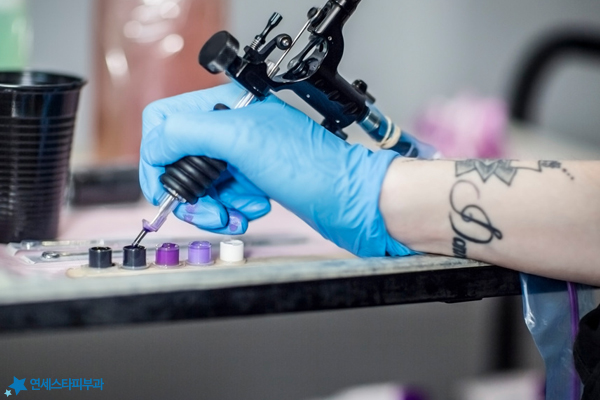
Skin Tone Changes with Each Season
Cover-up skin tattoos involve injecting a mixture of various pigments to closely match the skin color. The problem is that a person's skin tone subtly changes with the seasons and over time. It is not uncommon for an area that blended well with the surrounding skin immediately after the procedure to become mismatched in color and even more prominent as time passes.
Furthermore, it is difficult to rule out the possibility that some of the mixed pigment components may cause skin allergic reactions. Therefore, some individuals consider removal not only for aesthetic reasons but also for the sake of their skin health. In the long run, starting with proper treatment from the beginning can be a faster and safer way to restore the condition. Thus, cover-up tattoos, which are largely temporary, should be chosen with particular care.

Why Cover-Up Tattoo Removal is More Difficult Than Regular Tattoo Removal
Skin-toned and flesh-colored pigments are known to be difficult to break down with lasers. Therefore, removing cover-up skin tattoos often requires more sessions and a longer duration than regular tattoo removal. If multiple pigments are mixed in one area, and the tattoo size was increased to cover a larger area, the difficulty level increases accordingly.
It is especially important to proceed cautiously, as the pigment exposed to the laser may react unexpectedly, causing the skin to darken for a while or turn greenish and patchy. Due to these characteristics, Cover-Up Tattoo Removal is considered a difficult procedure, and the treatment plan needs to be much more detailed than for simple tattoo removal.
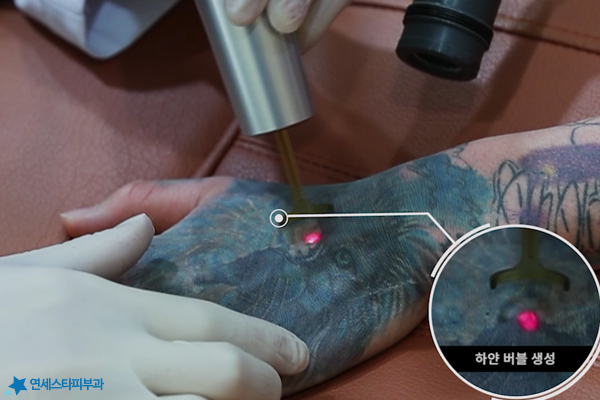
R0 Technique: Up to 4 Irradiations in One Session
Until now, it has been common practice for tattoo removal to involve only one laser irradiation per visit. While laser tattoo removal is clearly useful in that it can safely bring about changes, the amount that can be treated at one time is limited, which has led to the difficulty of a very long overall schedule. Because it doesn't end in one or two sessions and may need to be repeated for over a year depending on the condition, not a few people give up midway or hesitate to start at all. R0 is mentioned as a method that can alleviate some of this burden.
The R0 Technique is a method designed to allow repeated irradiation up to 4 times in the same area after applying a special medication to calm the bubbles, or skin reaction, that occur after laser irradiation. Since it can increase the number of irradiations without excessively raising the output of a single session, it is considered a relatively efficient option for cover-up tattoos, where pigments are difficult to break down.
However, the results and the number of sessions required may vary depending on skin type and tattoo condition. As the overall plan is likely to be long, it is necessary to confirm detailed factors such as the tattoo's condition, pigment density, color, and location one by one with a dermatologist before the procedure to establish a plan that is not excessive.
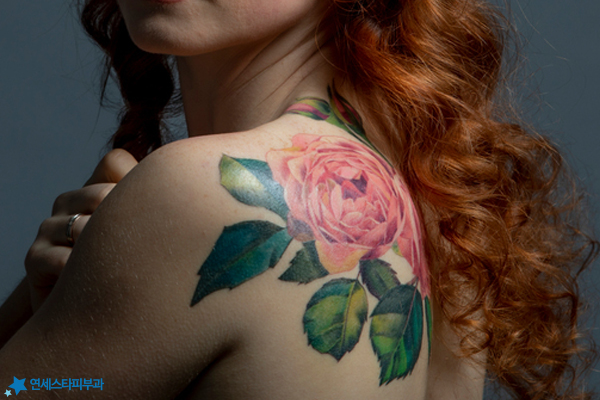
Regarding Session Planning and Scar Concerns
Tattoo removal generally does not end in a single session. It is usually realistic to expect 5 to 10 or more sessions, with intervals of 4-8 weeks, and cover-up tattoos may require even more sessions. Many people worry about scarring during the treatment process, but this possibility can be reduced by proceeding with customized treatment that considers both laser output and skin type.
Rather than vaguely fearing whether it will be completely erased or if scars will remain, and delaying the start, it is better to consult sufficiently with a dermatologist to create a plan suitable for your skin. If you have already received a cover-up skin tattoo, we recommend considering removal using the R0 Technique. If you are still considering the procedure, we advise you to decide after understanding that the color may change over time. If you would like to know more about whether Cover-Up Tattoo Removal is possible for your condition or what session plan is appropriate, you can find out through consultation inquiry.
Author · Chief Director Lee Sang-joo / Dermatologist As the Chief Director of Yonsei Star Dermatology Sinchon Main Branch, he treats all aspects of skin procedures, including skin boosters, scars, and pores. Detailed career history can be found in the Medical Staff Profile. · Last reviewed September 26, 2026
This article is intended to provide general medical information, and the treatment effects and downtime may vary depending on individual skin conditions. For an accurate diagnosis and treatment plan, please consult with a dermatologist.