
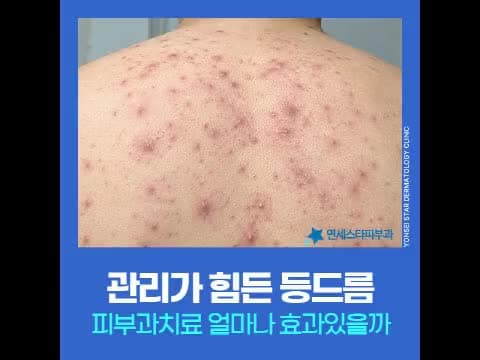
As summer approaches, many people become particularly conscious of their backs.
The back is a prominent area even with just a T-shirt, and it's not easy to manage alone. Since it's hard to reach, many end up leaving marks by forcibly squeezing acne. Yonsei Star Dermatology Sinchon explains the differences between back acne and facial acne, why dermatological acne extraction causes less irritation, and how Gold PTT management can help.
Why Back Acne is Particularly Difficult to Manage
The primary reason for frequent back acne is the distribution of sebaceous glands. The back, like the T-zone of the face, is an area where sebaceous glands are concentrated. With active sebum secretion, when sebum and dead skin cells block pores, an environment conducive to bacterial growth is created, easily leading to inflammatory acne.
While the face can be cared for daily with cleansing and skincare routines, it's difficult to check the condition of the back or apply products thoroughly on your own.
- As an area with well-developed sebaceous glands, sebum and dead skin cells easily block pores, leading to inflammation.
- The back is difficult to check, cleanse, and care for on your own.
- Shampoo and conditioner residues can remain on the back skin, blocking pores.
- External irritants like sweat, friction, and poorly ventilated clothing act as aggravating factors.
- Hormonal changes, stress, and diet also influence excessive sebum secretion.
Due to its inaccessibility, back acne is more easily neglected than facial acne, often leaving marks later. Symptoms tend to worsen when combined with summer sweat and poorly ventilated clothing, so it's good to check the condition in advance before more exposure occurs.
Facial Acne vs. Back Acne: What's Different?
Even though it's the same acne, the management conditions for the face and back differ. The differences highlighted in the original text are summarized below:
| Category | Facial Acne | Back Acne |
|---|---|---|
| Sebaceous Gland Distribution | Developed mainly in the T-zone | Concentrated sebaceous glands, like the facial T-zone |
| Self-Care | Easy to check daily with cleansing and skincare | Difficult to check, cleanse, and care for on your own |
| Skin Thickness | Relatively thin | Thick, making scars and hyperpigmentation more likely |
| Main Aggravating Factors | Sebum, dead skin cells, external irritants | Shampoo residue, sweat, friction, poorly ventilated clothing |
In the clinic, it's common to see patients with back acne who have already tried squeezing it multiple times themselves, leaving marks.
Why You Shouldn't Squeeze Acne Alone
When back acne appears, there's a temptation to squeeze it with fingers or nails, but this can be counterproductive.
Irritating with unhygienic hands or nails can spread inflammation to surrounding areas, or push sebum deeper into the skin, leading to cystic acne. The back's skin is thicker than the face's, making it an area prone to scarring or hyperpigmentation.
Especially on the hard-to-reach back, forcibly squeezing can deepen wounds, and those marks can lead to acne scars, requiring caution.
Why Dermatological Acne Extraction Causes Less Irritation
Acne extraction at a dermatology clinic is performed with sterilized tools in a hygienic environment. A specialist distinguishes between acne that can be extracted and acne that cannot, based on the skin condition, thereby reducing unnecessary irritation or the risk of secondary infection. Visiting the clinic is also helpful because it's easier to manage the back area, which is difficult to care for on your own.
It's common to combine extraction with calming care, and customized plans like Acne Care: Laser + Scaling or the multi-stage Triple Acne Package may be recommended based on skin condition. Simple extraction alone has limitations in controlling sebum secretion, so treatments that manage the sebaceous glands themselves, like Gold PTT, are often performed together.
If you have any questions, you can easily ask via Chat Inquiry.
How Does Gold PTT Work?
Gold PTT involves absorbing specially designed gold micro-particles into the sebaceous glands using ultrasound, then irradiating them with a specific wavelength of laser light. The gold particles generate heat when they meet the laser beam, and this heat selectively acts on the surrounding sebaceous glands and acne bacteria.
Because it selectively targets sebaceous glands, it typically has a short downtime, and there is minimal disruption to daily life after the procedure. The degree of response may vary from person to person.
Why Gold PTT is Used for Back Acne
There are several reasons why Gold PTT is often used for back acne management.
First, no medication is required. Existing acne medications can have uncomfortable reactions with long-term use, but Gold PTT directly targets sebaceous glands without the burden of medication.
Second, going out or resuming daily life immediately after the procedure is relatively easy. There is relatively less discomfort such as pain or the need for UV protection on the day of the procedure.
Third, because it's an approach that reduces the sebaceous glands themselves, it doesn't just provide temporary symptom relief but helps improve the environment where acne repeatedly occurs.
An Area Requiring Consistent Management
Back acne often results in scars or hyperpigmentation when people try to resolve it themselves. Combining extraction with Gold PTT at a dermatology clinic can cleanly clear existing acne while also approaching recurrence reduction at the sebaceous gland level. Depending on the skin condition, management like Acne-Fit may also be continued.
However, back acne is not resolved with a single procedure but is a process of gradual improvement through consistent management. The appropriate method may vary depending on the extent, type, and condition of the skin, so we recommend consulting sufficiently with a specialist to accurately understand your acne condition and establish a plan tailored to your skin.
Chat with us if you're curious about management tailored to your skin condition
This article was reviewed by Dr. Lee Sang-joo, the chief director of Yonsei Star Dermatology Sinchon. Dr. Lee Sang-joo is the president of the Korean Dermatological Association in 2026 and an adjunct professor at the Department of Dermatology, Yonsei University College of Medicine, having long treated pigment and scar conditions. You can find information about the medical team in Dr. Lee Sang-joo's Profile.
First published: 2026. 6. 10. / Last reviewed: 2026-07-23
This article provides general medical information, and management methods and results may vary depending on an individual's skin condition and acne type. Please consult a dermatologist for an accurate diagnosis and treatment plan.