
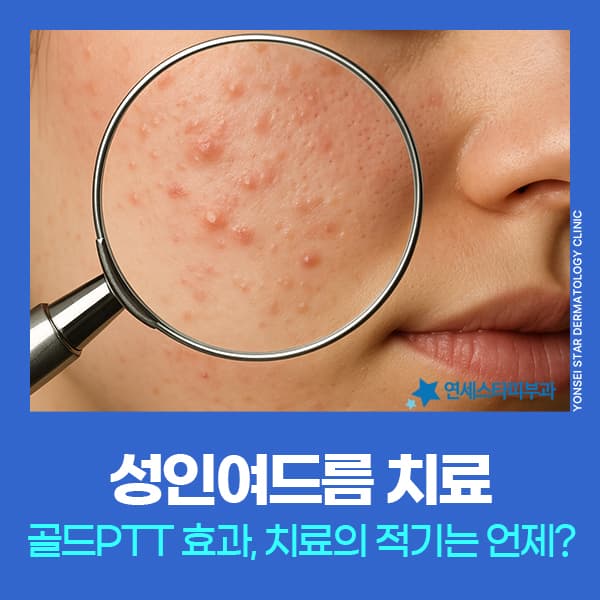
Many people think of acne as a problem for adolescents, but it is also very common in adults.
According to domestic statistics, one in three adults is known to suffer from acne.
However, adult acne differs from adolescent acne in both its causes and the areas where it appears.
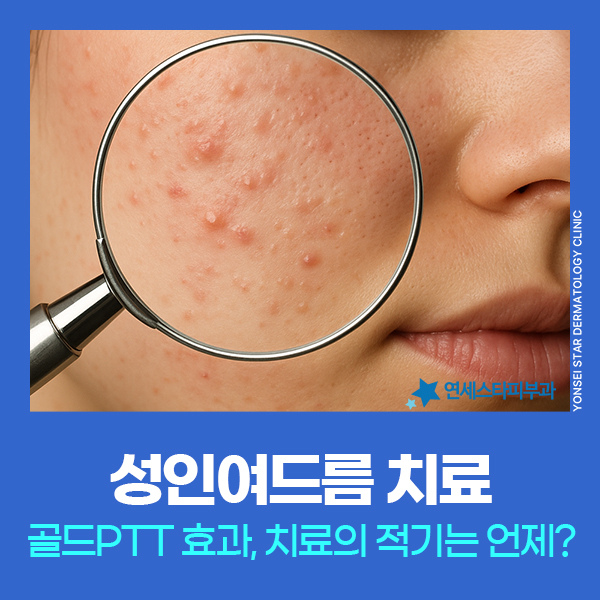
Where it appears is different
| Category | Adolescent Acne | Adult Acne |
|---|---|---|
| Main Cause | Hormonal fluctuations, excessive sebum | Stress-related hormonal changes, lifestyle habits |
| Area of Appearance | T-zone (forehead, nose, chin) | U-zone (cheeks, lower jaw, neck area) |
| Recurrence Pattern | Tends to decrease over time | Repeats depending on condition |
Adult acne is characterized by appearing on the cheeks and lower jaw, which have relatively less sebum, rather than the sebum-rich T-zone.
Many people find it more challenging than adolescent acne because it recurs repeatedly and is difficult to treat.
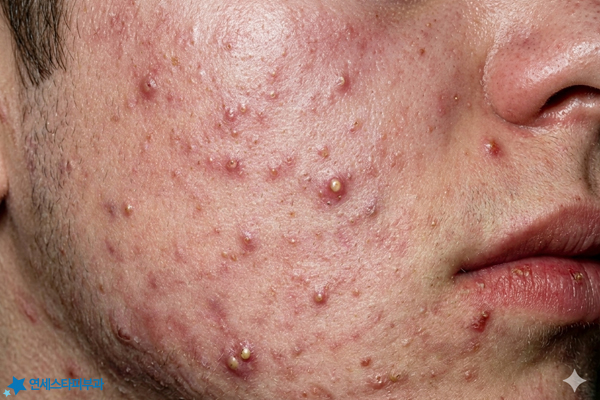
Treating existing acne vs. changing the environment
The basic treatments for adult acne are medication, extraction, and anti-inflammatory injections.
These methods are closer to treating existing acne. Therefore, even with management, it may recur repeatedly or not improve significantly.
To reduce recurrence, an approach that changes the environment itself where acne develops is also necessary. As long as the sebaceous glands remain overactive, acne may reappear in the treated areas.
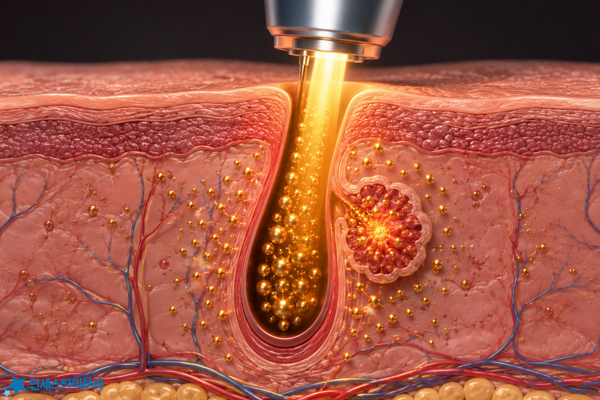
An approach to managing sebaceous glands
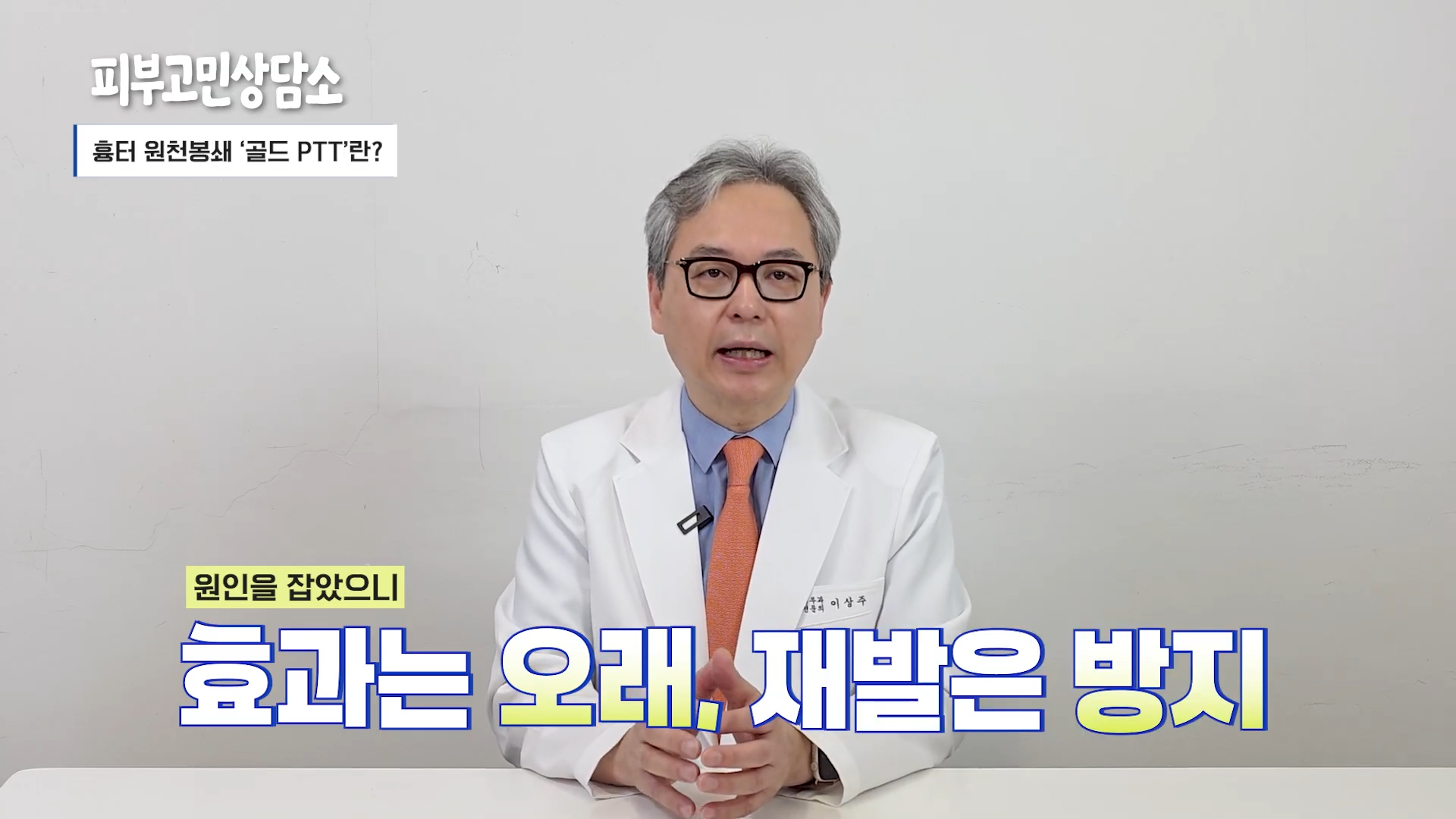
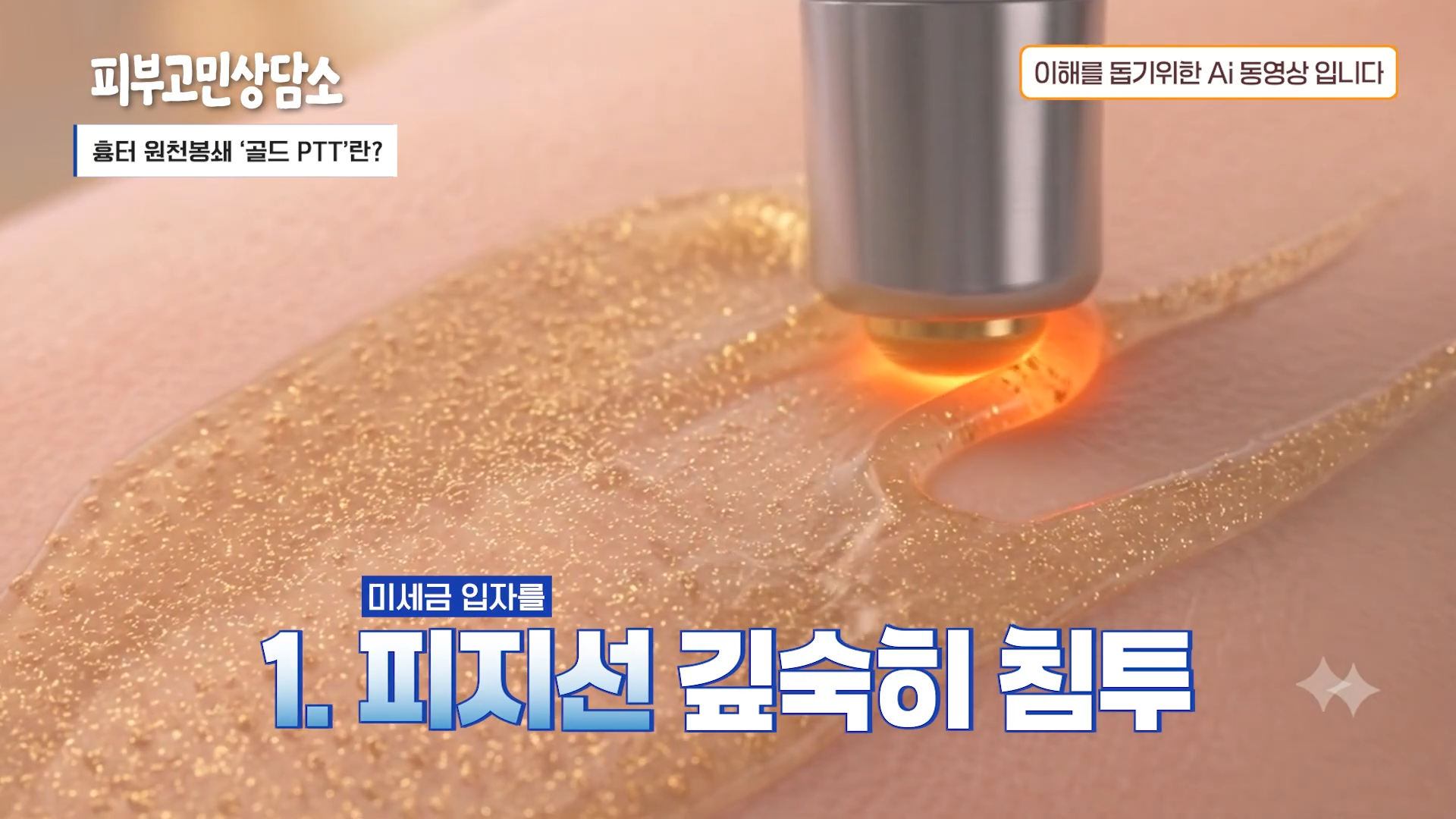
Gold PTT is an FDA-approved acne treatment method, with the core being the use of specially designed gold microparticles.
The approach involves delivering the particles into the pores and then creating heat with a laser to reduce the activity of the sebaceous glands themselves. It is also expected to have an effect on suppressing acne bacteria.
In other words, it's not about eliminating existing acne, but about creating conditions where it is less likely to form.
The cycle determines the results
This approach is not a one-time treatment. Changes accumulate by repeating the treatment with time for the sebaceous glands to react and recover.
If the interval is too short, the recovery burden may overlap, and if it's too long, the effect of the previous session may fade before starting again.
The optimal cycle varies depending on the amount of sebum secretion, the inflammatory state, and skin thickness. It is better to determine it by observing the progress rather than applying a fixed number of sessions uniformly.
In summary
If adult acne recurs, it may be difficult to reduce recurrence with medication and extraction alone. It is necessary to distinguish between an approach that treats existing acne and an approach that changes the environment in which it occurs, and to combine them if necessary.
Since the appropriate cycle and combination for your sebum condition and inflammation level must be confirmed directly, please try consulting about the right management direction for your acne via chat.
This article was reviewed by Dr. Lee Sang-joo (Dermatologist), the chief director. He leads Yonsei Star Dermatology Sinchon and will serve as the president of the Korean Dermatological Association in 2026. First published 2026-08-10 · Last reviewed August 16, 2026
This content provides general medical information, and individual differences in condition and treatment response may occur. Please decide on treatment and methods through consultation.